Braces Care 101: What to Expect, Foods to Avoid & Common Problems
Everything braces patients need to know: brushing and flossing around brackets, foods and drinks to avoid, common problems like loose brackets and pokey wires, and separator care.

Getting braces is a big step, and once the excitement of the first appointment wears off, most patients (and parents) have the same practical question: now what? Braces work around the clock to move your teeth into position, but the day-to-day habits you build around them are what keep treatment on schedule and your smile healthy underneath.
This guide covers the basics every braces patient at Schoettger Orthodontics should know: how to brush and floss around brackets and wires, which foods and drinks to avoid, what to do when something feels loose or pokes, and how to handle separators if you're just getting started. Keep it bookmarked. You'll likely reference it more than once between now and the day your braces come off.
Brushing and Flossing With Braces
Braces create a lot of new nooks for food and plaque to hide in, which is why your brushing routine matters more now than it ever has before. The goal is simple: keep what we call the "danger zone," the space between each bracket and the gumline, as clean as possible every single day.
- Brush at least twice a day, and after every meal when you can. If brushing isn't possible right after eating, rinse thoroughly with water instead.
- Use small circular motions at the gumline, and brush slowly around every tooth and bracket, above the bracket, below the bracket, and along the wire.
- Don't forget your tongue and the roof of your mouth.
- Floss before you brush, using a floss threader (we like the "Platypus" tool) to guide floss up under the wire and all the way to the gumline between each tooth.
This routine takes a few extra minutes compared to brushing without braces, but it's worth every second. Plaque that's allowed to sit around a bracket for weeks or months can leave permanent white marks on the enamel, called decalcification, right where the bracket used to be. Once those marks form, they don't reverse on their own. Prevention is straightforward: brush and floss often, and limit sugary drinks and sports drinks to about once a week.
A quick habit that helps more than people expect: keep a travel toothbrush in your bag, backpack, or car. Braces patients who can sneak in a midday brush after lunch tend to sail through treatment with far fewer sore spots and cleaner checkups.
Foods and Drinks to Avoid
Brackets and wires are strong, but they're not indestructible, and certain foods put unnecessary stress on your braces or your teeth. As a general rule, if a food is hard, sticky, or chewy, treat it as off-limits for the duration of treatment.
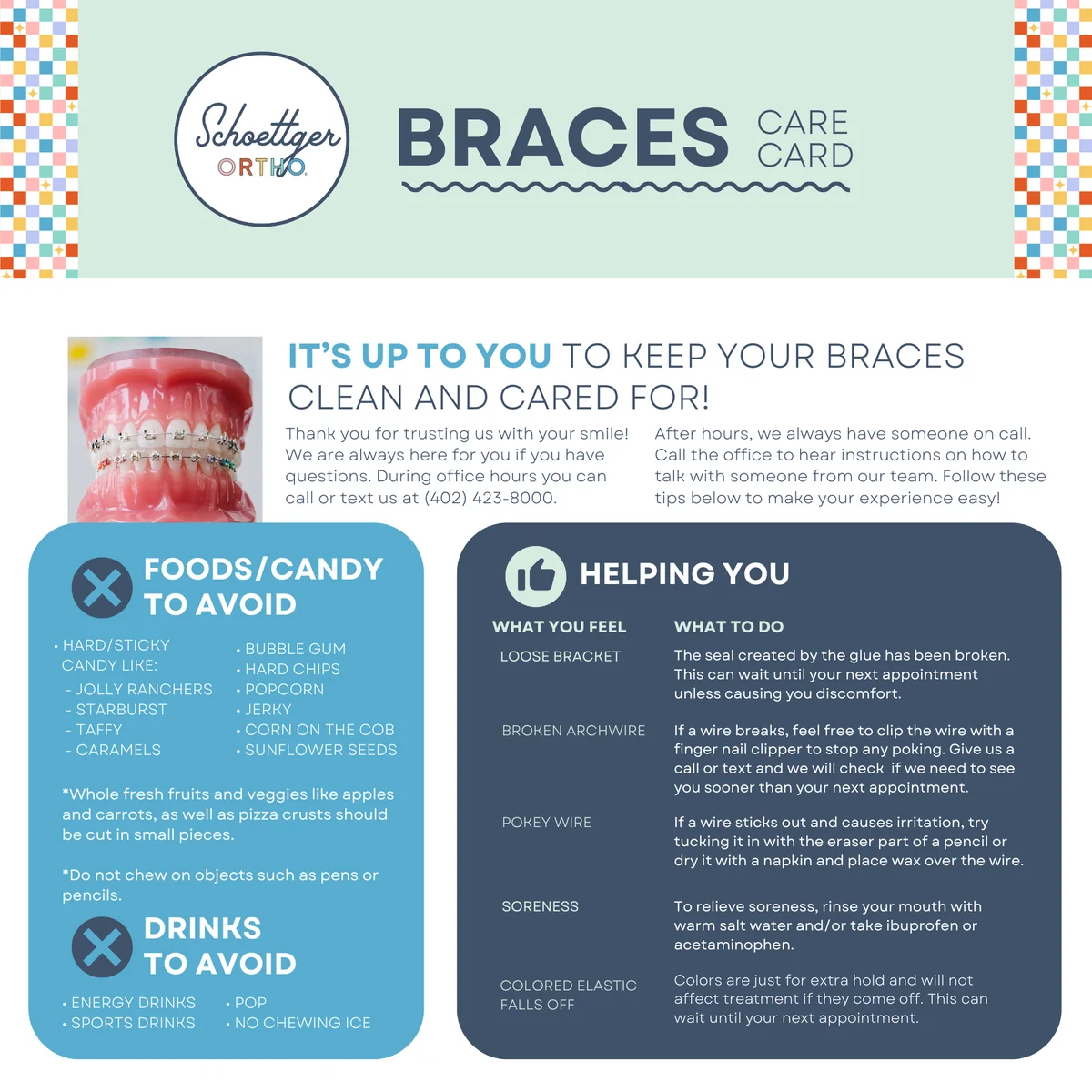
Skip hard and sticky candy like Jolly Ranchers, Starburst, taffy, and caramels, along with bubble gum, hard chips, popcorn, beef jerky, corn on the cob, and sunflower seeds. Whole fruits and vegetables are fine, but cut them into smaller pieces first rather than biting directly into them, and do the same with pizza crust. And as tempting as it is while you're studying or thinking, never chew on pens or pencils.
On the drink side, steer clear of energy drinks, sports drinks, and pop. All three are loaded with sugar and acid that erode enamel and feed the bacteria that cause decalcification, and that risk climbs significantly with braces in the mouth. Chewing ice is also a habit worth breaking, since it can chip a tooth or pop a bracket loose in an instant.
None of this means treatment has to feel restrictive. Most of your favorite foods are still on the table; you'll just want to cut a few things into smaller pieces and skip the truly hard or sticky stuff until your braces come off.
Common Braces Problems and What to Do
Even with great care, small issues come up during treatment. Most are easy to manage at home until your next visit, and none of them mean something has gone wrong with your treatment plan.
Loose bracket
A bracket can loosen when the seal between the bracket and the tooth breaks, sometimes from biting into something too hard. If it's not causing discomfort, it's usually fine to wait until your next appointment. If it's bothering you, give us a call.
Broken archwire
If a wire snaps and is poking you, you can clip it with a clean fingernail clipper to stop the poking, then call or text our office so we can get you scheduled for a repair.
Pokey wire
Wires can shift and start poking a cheek or gum as teeth move. Use the eraser end of a pencil to gently tuck the wire back, dry the area, and cover the spot with a small piece of orthodontic wax until you can be seen.
Soreness
Some tenderness after an adjustment is completely normal. A warm salt-water rinse and an over-the-counter pain reliever like ibuprofen or acetaminophen, taken as directed, usually resolves it within a day or two.
A colored elastic falls off
Those small colored rings around your brackets are cosmetic. If one comes off, it doesn't affect your treatment, and it can wait until your next scheduled visit.
Anything that feels more serious than this list, or that isn't covered here, is worth a call. Our office can be reached at (402) 423-8000, and after-hours help is available for genuine emergencies, so you're never guessing on your own.
Separators: Getting Ready for Braces
If you're a few weeks out from getting braces on, you may have already had separators placed. A separator is a small elastic band your doctor places between two back teeth to gently push them apart, creating just enough space to fit a metal band around the tooth at your next appointment.
Separators can make your teeth feel tender for a day or two, especially when biting down. Ibuprofen or acetaminophen, taken as directed, helps with the discomfort. While they're in, avoid chewy or sticky foods and gum, and brush carefully around them; brushing too aggressively can dislodge a separator before it's done its job.
One important note: don't floss between the teeth where separators are placed. Floss can push a separator out of position and up into the gums, which is uncomfortable and unhelpful. It's also completely normal for a separator to fall out on its own once it has created enough space. If floss no longer catches when you pass it near that spot, the separator has done its job and doesn't need to be replaced.
You're Not on Your Own
Every patient hits a bump or two during treatment, and that's expected. What matters is knowing what can wait and what needs a call, and we're always just a text or phone call away at (402) 423-8000. For a full breakdown of every appliance we treat with, including braces, retainers, Herbst appliances, and expanders, visit our Appliance & Aftercare Instructions page, where you can also download printable care cards for each one.
Once your braces come off, a whole new phase begins, with its own set of habits to learn. Read our guide on getting your braces off and keeping your new smile to know exactly what happens next, from your final appointment to your first night in retainers.
What to Expect in the First Few Days
The first two or three days after getting braces on are usually the biggest adjustment. Your teeth may feel tender as they start to shift, your cheeks and lips may need a day or two to get used to the brackets, and you might notice you're talking slightly differently at first. All of this settles quickly.
Soft foods make the first few days more comfortable: think mashed potatoes, scrambled eggs, soup, smoothies, and pasta. You don't need to stay on a soft-food diet for the whole time you have braces, just while your mouth adjusts. Orthodontic wax is your best friend during this stretch. Press a small ball of it over any bracket that's rubbing a cheek or lip, and it will smooth things out immediately. We send a supply home with every new braces patient, and we're always happy to give you more.
Building a Routine That Sticks
The patients who breeze through treatment with the fewest problems are almost always the ones who build braces care into a routine rather than treating it as a chore. A few habits that make a real difference over the course of treatment:
- Keep a small kit handy, whether at home, in a backpack, or in your car, with a travel toothbrush, floss threaders, and orthodontic wax.
- Set a reminder on your phone if mornings or evenings are hectic. A missed brushing here and there adds up faster than it seems.
- If you play sports or an instrument, ask us about a compatible mouthguard. Braces don't have to sideline you from either.
- Keep your regularly scheduled appointments, even if nothing feels urgent. Small adjustments along the way are what keep treatment on track and often shorten total treatment time.
Braces are temporary, but the habits you build while wearing them, especially around brushing, flossing, and being mindful of what you eat, tend to stick around long after they come off. That's a good thing for your smile well beyond the day your treatment ends.
Schedule your free consultation and discover your Schoettger shine.
Start your smile transformation today
Schedule your free consultation and discover your Schoettger shine.