Herbst Appliance: How It Works, What to Expect, and Care Tips
A Herbst appliance guides the lower jaw forward to correct an overbite while your child is still growing. Learn how it works, the best age to start, what the first two weeks feel like, how to handle loose or poking parts, what removal involves, and whether adults are candidates. Trusted guidance from Schoettger Orthodontics, serving Lincoln and Seward.


If your orthodontist has recommended a Herbst appliance for your child, you probably have questions. What does it actually do? Will it hurt? How long does it stay in? Can my child still eat normally, play sports, or play an instrument?
A Herbst appliance is one of the most effective tools we have for correcting a bite while a child is still growing. It works with your child's natural growth rather than against it, which is why timing matters so much. At Schoettger Orthodontics, Dr. Jared and Dr. Anna use Herbst appliances as part of early interceptive treatment for families across Lincoln, Seward, and the surrounding Nebraska communities.
This guide covers what the appliance does, the best age to start, what the first two weeks really feel like, how to handle the small problems that come up, and what happens when it comes off.
What Is a Herbst Appliance?
A Herbst appliance is a fixed orthodontic device that holds the lower jaw in a forward position. It is sometimes called a Herbst device or Herbst mouth appliance, and it is used most often to correct an overbite, also described as a Class II bite, where the lower jaw sits too far behind the upper jaw.
The appliance has two main parts. Metal frameworks are attached to the upper and lower teeth, usually cemented to the back molars. Connecting these frameworks are two telescoping rod-and-tube arms, one on each side. Those arms are what hold the lower jaw forward every time the mouth closes.
Because the appliance is cemented in place, it works continuously. There is nothing for your child to remember to wear, no compliance chart, and no aligner to lose. That is one of the biggest advantages over removable alternatives, especially for younger patients or busy teens.
The Herbst is a growth-guidance appliance rather than a tooth-straightening one. It changes how the jaws relate to each other. Braces or Invisalign usually follow to align the teeth themselves once the bite relationship has improved.
How a Herbst Appliance Corrects the Bite
When the lower jaw is held forward consistently, it encourages the lower jaw to grow in that position and discourages the upper jaw from growing too far ahead. Over time, the bite relationship shifts.
This only works while the jaw is still developing. That is why the Herbst is considered a growth-modification appliance and why the age window matters more than it does for most orthodontic treatment.
Most patients wear a Herbst for roughly nine to fifteen months, though the exact timeline depends on the severity of the bite, how the jaw responds, and where your child is in their growth curve. Dr. Jared and Dr. Anna monitor progress at regular checks and adjust the appliance as the jaw moves.
Fixing a significant overbite early does more than improve how a smile looks. Front teeth that stick out well beyond the lower teeth are far more vulnerable to injury from falls and sports. Reducing that overjet lowers the risk of a chipped or knocked-out tooth during the years when kids are most active.
What Age Is Best for a Herbst Appliance?
Most Herbst treatment happens between ages eleven and fourteen. The appliance depends on active jaw growth, so the ideal window is right around the adolescent growth spurt, often slightly earlier for girls than for boys.
The American Association of Orthodontists recommends an initial orthodontic evaluation by age seven. That early visit is not usually about starting treatment. It is about identifying whether a bite problem is developing and planning the right moment to intervene. Many children who are eventually good Herbst candidates are first identified at that age-seven check and then simply monitored, at no charge, until the timing is right.
Starting too early can mean the correction is lost as growth continues. Starting too late means less growth remains to work with. This is why a practice that watches your child over several years has an advantage. We are not guessing at the window. We are tracking it.
Can Adults Get a Herbst Appliance?
This is one of the most common questions we hear, and the honest answer is that a Herbst works differently in adults. Once jaw growth is complete, the appliance can no longer guide how the jaw develops. Any change comes from moving teeth rather than reshaping the bite relationship.
That does not mean adults with an overbite are out of options. Adult bite correction may involve braces or Invisalign with elastics, other specialized appliances, or in more significant cases, coordination with an oral surgeon. Our doctors evaluate each case individually and will tell you plainly what is realistic.
If you are an adult considering treatment, a consultation is the right starting point. We will explain what can be corrected with orthodontics alone and what would require a combined approach.
The First Two Weeks: What to Really Expect
The adjustment period is real, and knowing what is coming makes it much easier. Most families find the first week the hardest and the second noticeably better.
Expect soreness for the first three to five days. Your child's jaw muscles are being asked to hold a new position, and the teeth anchoring the appliance will feel tender. Over-the-counter pain relief taken as directed helps considerably during this stretch.
Speech changes for a few days. Most kids sound slightly different at first and adapt quickly. Reading aloud at home for ten minutes a day speeds this up more than anything else.
Extra saliva is normal in the first week. The mouth reads the appliance as something new and responds accordingly. It settles on its own.
Cheek irritation is common early on. Orthodontic wax pressed over any spot that rubs gives immediate relief while the tissue toughens up. We send wax home with every Herbst patient and are happy to provide more anytime.
Here is what helps most during the adjustment:
- Stick to soft foods for the first several days. Yogurt, smoothies, pasta, eggs, and soup make the first week far more comfortable.
- Use wax generously. There is no reason to tough out a sore spot.
- Read out loud daily. Speech normalizes faster with deliberate practice.
- Take pain relief before it gets bad. Staying ahead of soreness works better than chasing it.
- Keep meals unhurried at first. Smaller bites and slower chewing help while your child adapts.
Eating and Daily Care
After the first week, most kids eat close to normally. A few foods do need to come off the menu for the duration of treatment, because they can bend the rods, loosen the bands, or break the cement seal.
Avoid hard and sticky foods: ice, hard candy, nuts, popcorn kernels, caramel, taffy, gum, and hard crusty bread. Cut apples, carrots, and corn off the cob into pieces rather than biting into them directly.
Cleaning takes a little more attention than usual. Food collects around the bands and along the rods, and the areas underneath the metal are where decalcification tends to start if brushing gets sloppy.
Brush after every meal when possible, angling the brush to reach above and below the bands. A water flosser is genuinely useful here and reaches places a toothbrush struggles with. Many Herbst families find one worth the investment for the length of treatment.
Sports are fine. In fact, reducing an overbite lowers injury risk. A mouthguard is still recommended for contact sports, and we provide free sports mouthguards to our patients. Just let us know and we will fit one.
Wind instruments take some adjustment for band students, but nearly all players adapt within a couple of weeks.
Common Problems and What to Do
Small issues come up during Herbst treatment. Most are easy to handle, and knowing which ones need a call saves worry.
The rod has come out of the tube
This usually happens after opening the mouth very wide, such as during a yawn. Often you can guide it back by having your child open wide and slide the rod back into the tube. If it will not reseat, call the office.
Something feels loose
A loose band means the cement seal has broken, and that needs attention promptly. Bacteria can get underneath a loose band and cause decay. Call us and we will get your child in.
A screw has loosened or fallen out
Save the piece if you find it and call the office. This is a quick fix but should not wait.
Something is poking
Apply wax for immediate relief and call us. Do not attempt to bend or cut any part of the appliance at home.
Soreness returns after weeks of comfort
This can be normal after an adjustment, but persistent or worsening pain warrants a call. Do not wait it out.
Our patients have access to after-hours care at no extra charge. If something breaks on a weekend or in the evening, reach out. That is included in your treatment, not billed separately.
Herbst Appliance With an Expander
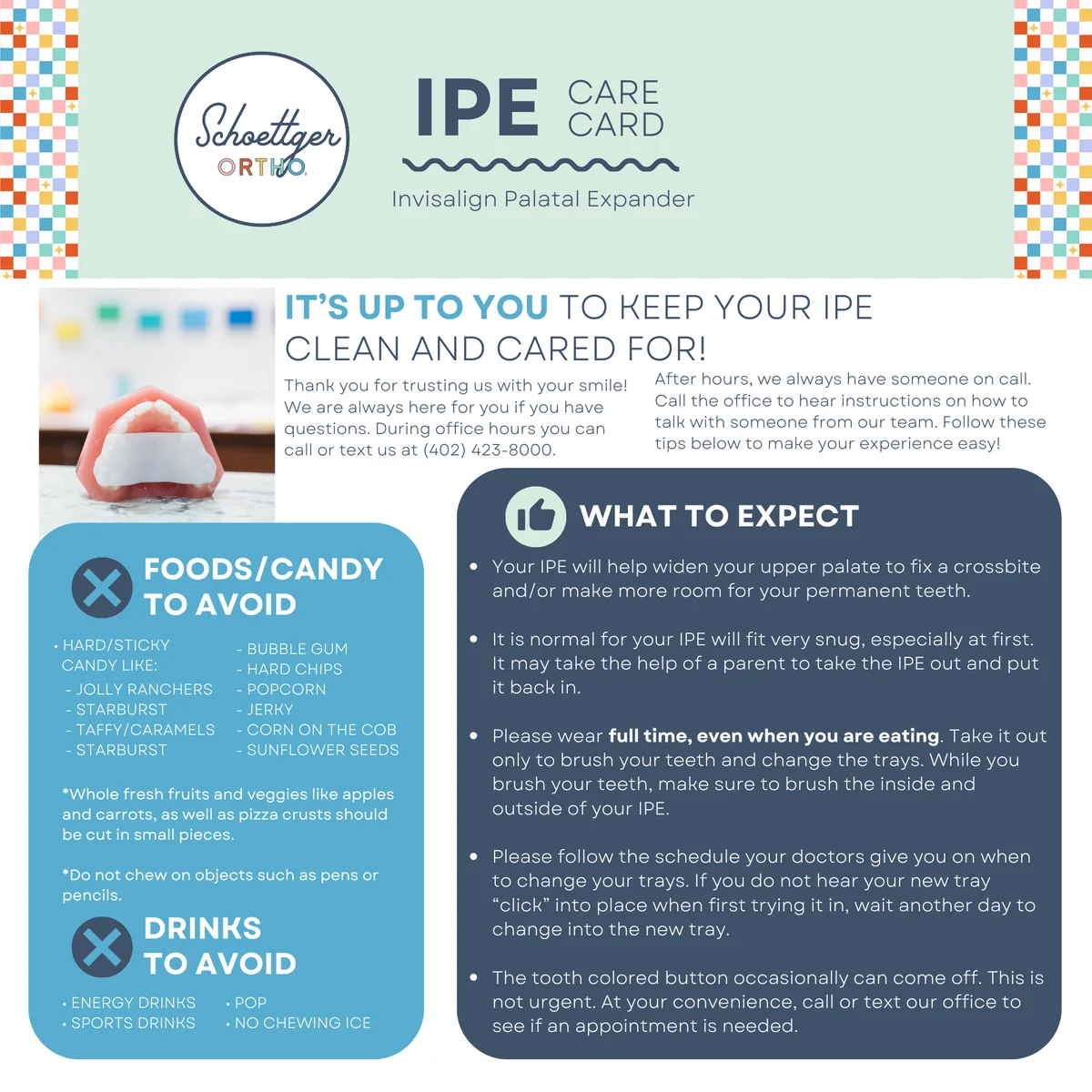
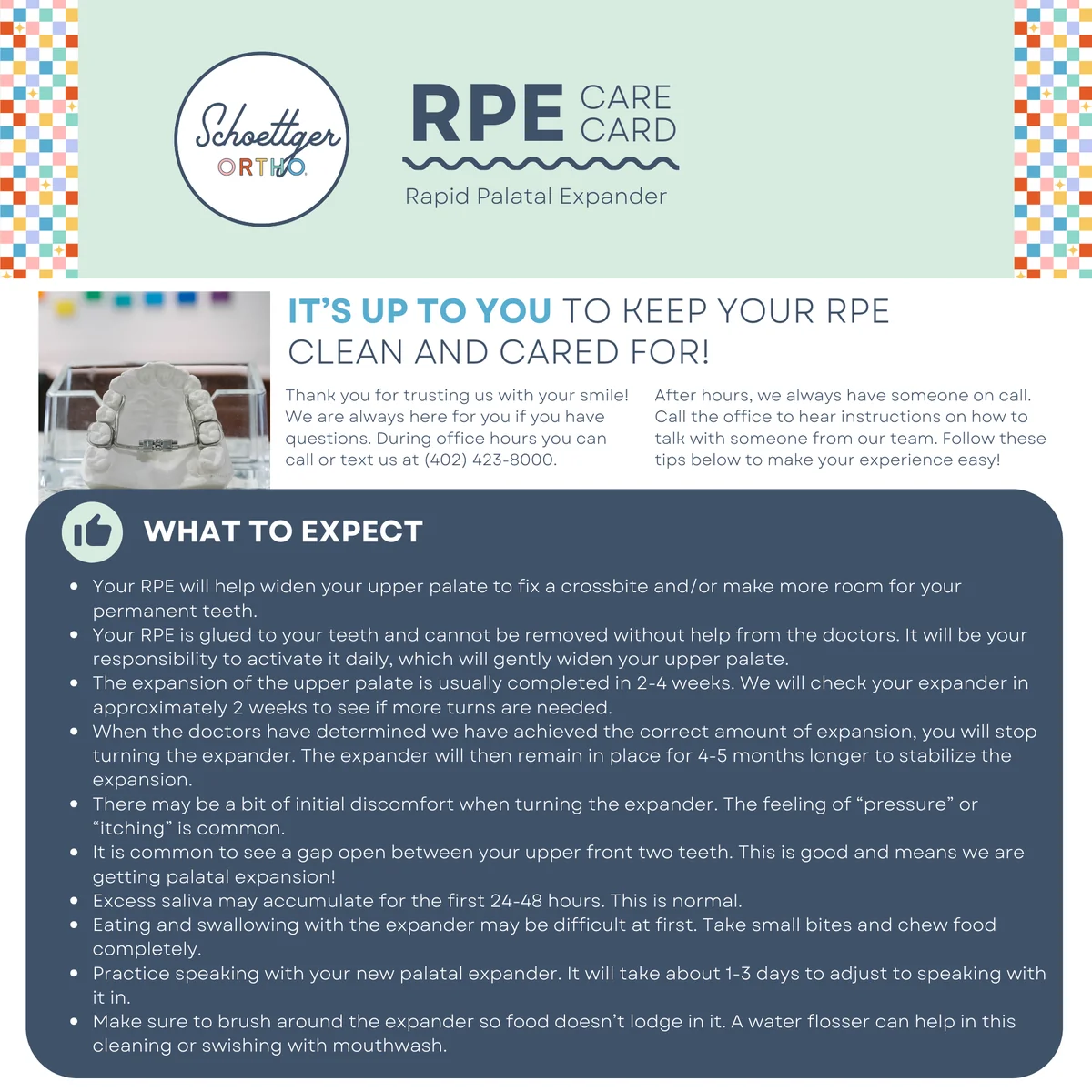
Herbst appliances are frequently paired with a rapid palate expander. The two address different problems, and many patients need both.
The expander widens a narrow upper jaw, creating room for permanent teeth to come in without crowding. The Herbst addresses the front-to-back relationship between the jaws. A child can have both a narrow upper arch and a lower jaw that sits too far back, and treating only one leaves the other unresolved.
When both are needed, they are often used together or in close sequence. Our in-house lab lets us fabricate and adjust these appliances on site, which means faster turnarounds and fewer delays waiting on an outside lab.
Herbst Appliance Removal
Removal is quick and far easier than most families expect. It is an appointment measured in minutes, not hours, and it does not require anesthetic.
The bands are loosened, the appliance comes off in pieces, and the remaining cement is cleaned from the tooth surfaces. Teeth often feel slightly tender for a day or two afterward and may feel unusually smooth or slippery once the metal is gone. That sensation fades within a few days.
Braces or Invisalign usually follow. The Herbst has corrected the bite relationship, and the next phase aligns the individual teeth. Some patients move into that phase immediately, others after a short break.
Retention matters after treatment. Teeth and jaws both have a tendency to drift back toward their old positions, and a retainer is what holds the result. One set of retainers is included with treatment at our practice, and our Retainer Plus Program makes replacements simple and affordable when life happens.
Before and After: What Change Looks Like
The most visible change is usually in profile. When the lower jaw sits well behind the upper, the chin can look recessed and the upper front teeth can appear to protrude. As treatment progresses, the profile typically becomes more balanced and the front teeth sit in a more protected position.
Functional changes matter just as much and are less obvious in photos. Biting and chewing become more efficient when the teeth meet properly. Uneven wear from a poorly aligned bite is reduced. In some cases, strain on the jaw joint decreases.
We take digital records with our iTero scanners at the start of treatment and throughout, so you can see the change measured rather than guessed at. Many parents find the scans more convincing than photos, because the movement is documented precisely.
Results vary by patient. The degree of correction depends on the starting bite, how much growth remains, and how well the appliance is cared for during treatment.
What a Herbst Appliance Costs
Cost depends on whether the Herbst is part of a full treatment plan or a standalone phase, and on what follows it. Because it is usually one component of two-phase treatment, it is most useful to look at the overall plan rather than the appliance in isolation.
At Schoettger Orthodontics, we work with all insurance plans and are PPO for many of the main orthodontic insurance providers in Nebraska. We offer no-interest payment plans with automatic monthly payments, a discount for payment in full, and a family discount for households with more than one patient in treatment.
Your first visit is free, and it includes a full exam, digital scans, X-rays and photos, a digital smile simulation, and a written treatment plan with transparent pricing. You will leave knowing exactly what treatment involves and what it costs, with your questions answered.
Once treatment begins, everything is included. Every visit, after-hours care, soft tissue laser recontouring if needed, one round of retainers at the end, and checkup visits for up to a year after treatment all come at no extra charge.
Is a Herbst Right for Your Child?
The only way to know is an evaluation. Not every overbite calls for a Herbst, and not every child is at the right stage for one. Some patients do better with a different appliance, and some simply need to be watched a while longer before treatment begins.
What we can tell you is that the timing question is worth answering sooner rather than later. The growth window that makes a Herbst effective does not stay open indefinitely, and knowing where your child stands lets you plan rather than react.
Dr. Jared and Dr. Anna Schoettger are board-certified orthodontists carrying forward the practice their father, Dr. Bob, built in Lincoln more than forty years ago. We treat families in Lincoln, Seward, and the surrounding communities, with an in-house lab, iTero digital scanning, and a team that has guided a lot of kids through exactly this.
Schedule your free consultation and discover your Schoettger shine.

Start your smile transformation today
Schedule your free consultation and discover your Schoettger shine.