What Age Should Kids Get Braces?
Wondering what age should kids get braces? Learn when children typically start treatment and when to schedule an evaluation with Schoettger Orthodontics.

Parents often wonder what age should kids get braces after noticing crowded teeth, a changing bite, or permanent teeth coming in at an angle. There isn’t one age that works for every child. The right timing depends on tooth eruption, jaw growth, bite function, available space, and the type of orthodontic concern.
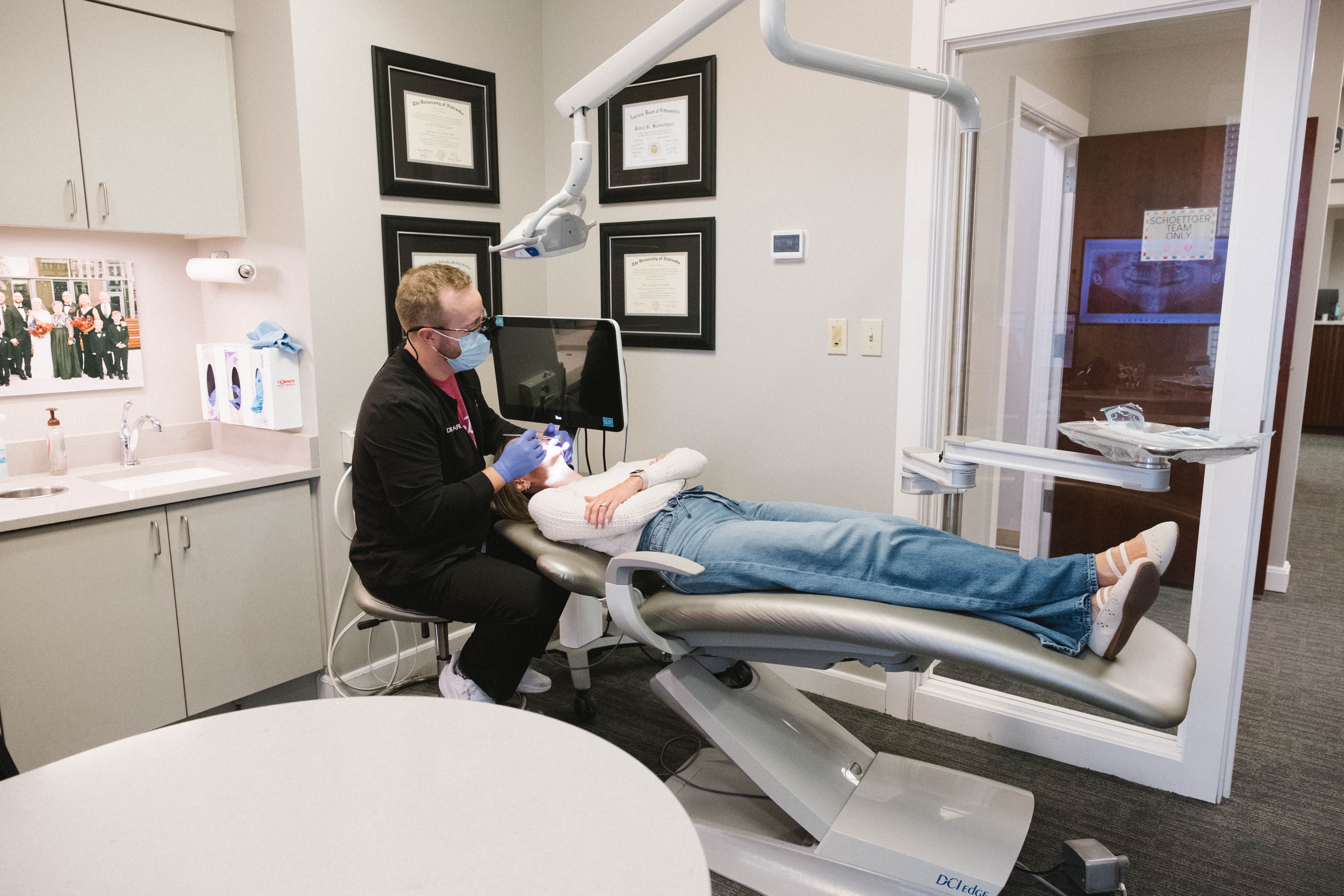
Many children have their first orthodontic evaluation around age 7. That doesn’t mean braces start at 7. An early visit gives the orthodontist a chance to see how the teeth and jaws are developing and whether a child should be monitored or treated sooner.
Full braces often begin later, commonly during the later elementary or early teen years when most permanent teeth have erupted. Some children benefit from treatment before that point, while others can wait.
At Schoettger Orthodontics, families in Lincoln and Seward can meet with board-certified orthodontists who base treatment timing on each child’s development. The practice provides braces for children and teens, early orthodontic care, Invisalign treatment, and digital treatment planning.
Parents looking for a local orthodontist for children can schedule an evaluation to find out whether treatment is needed now, later, or not at all.
When Should a Child First See an Orthodontist About Braces?
A child’s first orthodontic appointment is usually an evaluation rather than the start of braces. The American Association of Orthodontists recommends that children have an orthodontic checkup by age 7.
At that age, many children still have a mix of baby teeth and permanent teeth. That combination gives an orthodontist useful information about how permanent teeth are erupting, whether enough space is available, and how the upper and lower jaws are developing.
Parents wondering when an orthodontic evaluation should happen don’t need to wait until every permanent tooth has appeared.
During an early evaluation, the orthodontist may look at:
- How the upper and lower jaws are growing and fitting together
- Whether permanent teeth appear to have enough room to erupt
- Crowding, spacing, crossbites, overbites, or underbites
- The position and eruption path of permanent teeth
- Early or delayed loss of baby teeth
- Oral habits, such as prolonged thumb sucking, that may affect the bite
- Jaw movement while the child bites, chews, or closes their mouth
Orthodontic X-rays may also be recommended when the orthodontist needs information that can’t be seen during a visual examination. Images can show developing permanent teeth, missing or extra teeth, eruption paths, and parts of the jaw beneath the gums.
Not every child needs new X-rays at the first appointment. The orthodontist may consider recent dental images, the child’s dental history, and what’s found during the examination before deciding whether additional images are useful.
In many cases, the result of an age-7 evaluation is simply observation. The orthodontist may recommend another visit several months or a year later to check how growth and tooth eruption are progressing.
That monitoring period can prevent treatment from starting before a child is ready.
What Age Do Kids Usually Get Braces?
Many children begin full braces between about ages 10 and 14. By this stage, most of the permanent teeth needed for treatment have usually erupted, while the jaws may still be growing.
That age range is a general pattern rather than a rule.
Two 12-year-olds can be at very different stages of dental development. One child may have almost all permanent teeth in place. Another may still be losing baby teeth. Their bites, jaw growth, available space, and treatment needs may also be completely different.
An orthodontist may consider a child ready for braces when:
- Enough permanent teeth have erupted for the planned treatment
- Crowding or spacing needs correction
- The bite needs active treatment
- Tooth positions can be addressed efficiently at the child’s current growth stage
- The child can manage brushing, appliance care, and regular appointments
The goal isn’t to put braces on as soon as possible. Treatment is usually scheduled when the child’s stage of development gives the orthodontist a good opportunity to address the problem.
Parents who are asking whether their child needs orthodontic care should look beyond age alone. Crowding, bite changes, unusual eruption patterns, difficulty chewing, and jaw position can all affect the recommendation.
Some children may need partial braces or another appliance before full braces. Others may be monitored until additional permanent teeth arrive.
Schoettger Orthodontics offers traditional metal braces, clear upper braces, and digital treatment options. LightForce technology allows treatment to be planned around the individual patient, while iTero scanning can create digital models without traditional impression material.
The orthodontist can explain which option fits a child’s teeth, bite, growth, and treatment plan.
When Might Early Orthodontic Treatment Be Recommended?
Most children who see an orthodontist early won’t need immediate treatment. Some dental and jaw problems, however, may be easier to address while a child is still growing or before additional permanent teeth erupt.
Early treatment may be considered for concerns such as:
- Crossbites that cause the upper and lower teeth to meet incorrectly
- Severe crowding or teeth that don’t have enough room to erupt
- Pronounced overbites or underbites
- Early loss of baby teeth that affects space for permanent teeth
- Front teeth that protrude and may be more exposed to injury
- Uneven jaw growth
- Permanent teeth erupting in unexpected positions
- Oral habits that continue to affect tooth or jaw position
The treatment used depends on the problem.
An orthodontist may recommend an expander when additional width is needed, a space maintainer when a baby tooth has been lost early, partial braces for selected teeth, or another orthodontic appliance suited to the child’s development.
Early treatment may create room for incoming teeth, address some bite problems, or guide teeth as they develop. It may also help the orthodontist manage a jaw relationship while growth is still occurring.
This doesn’t mean every child who starts early will automatically go through two full rounds of braces.
A child might have a limited first phase followed by an observation period. Full braces may come later if additional alignment or bite correction is needed after the permanent teeth erupt. Another child may need no early appliance at all and can simply return for periodic growth checks.
Baby teeth also affect treatment timing.
They hold space for the permanent teeth developing below them. If baby teeth are lost much earlier or later than expected, or permanent teeth appear in unusual positions, an orthodontic evaluation can help determine what’s happening.
Those changes don’t automatically mean a child needs braces. They give the orthodontist information that can help shape the timing of future care.
How Does Dental Development Affect Braces Timing?
Children don’t all lose baby teeth, grow jaws, or develop permanent teeth on the same schedule. That variation is one reason orthodontists look at dental development rather than choosing treatment based only on a birthday.
A child can be the same age as a classmate and still be months or even years apart in tooth development.
| Stage of Development | What the Orthodontist May Assess | Possible Next Step |
|---|---|---|
| Early mixed dentition | Jaw growth, bite, spacing, crowding, crossbites, and developing permanent teeth | Observation or early treatment for a specific concern |
| Ongoing tooth eruption | Loss of baby teeth, eruption paths, and room for permanent teeth | Monitoring or an appliance if needed |
| Most permanent teeth present | Alignment, spacing, bite, and jaw relationship | Full braces or another orthodontic treatment may be considered |
| Later childhood or teen years | Remaining tooth alignment and bite concerns | Active treatment based on the child's needs |
A child doesn’t need to wait until the last baby tooth falls out to see an orthodontist. The mixed-dentition years can provide useful clues about where permanent teeth are heading and how the jaws are developing.
Growth can also influence the way certain bite problems are treated.
An orthodontist may decide that a jaw-related concern should be addressed while growth is still occurring. A problem limited mainly to tooth alignment may be better treated after additional permanent teeth erupt.
Parents may spot changes at home before a routine orthodontic visit. Crowded teeth, large gaps, difficulty biting or chewing, jaws that shift when closing, prolonged thumb sucking, or teeth that seem unable to erupt normally are reasonable reasons to request an evaluation.
An orthodontist can determine whether the child needs treatment or simply needs to be watched as development continues.
Routine dental care should continue throughout this process. Children still need regular dental checkups and daily brushing and flossing before, during, and after orthodontic treatment.
Once braces are placed, cleaning around brackets and wires requires extra attention. Following the orthodontic team’s instructions can help keep teeth and gums healthy while the teeth are moving.
What Should Parents Expect at a Child’s Orthodontic Visit?
A first orthodontic visit should leave parents with a clearer picture of their child’s dental development and what happens next.
At Schoettger Orthodontics, the first consultation can include an orthodontic examination, digital smile simulation, and treatment planning. Families can schedule directly without waiting for a referral.
The orthodontic team may review the child’s dental and health history, examine the teeth and bite, and assess jaw growth. Digital records or imaging may be used when needed to see tooth positions and developing structures that aren’t visible during the examination.
The orthodontist will then determine whether treatment should start, whether the child should return for monitoring, or whether no orthodontic care is currently needed.
If braces or another appliance is recommended, parents can ask:
- What problem is the treatment intended to correct?
- Why is this the preferred time to start?
- Will treatment happen in one phase or separate stages?
- How long is treatment expected to last?
- Which braces or appliance options are suitable?
- What will the child need to do at home?
- How often will appointments be scheduled?
- What insurance and payment options are available?
Parents should also tell the orthodontic team about sports, musical instruments, school activities, or other routines that could affect appliance choices and daily care.
For a child who isn’t ready for treatment, monitoring provides a clear plan instead of leaving parents to guess when they should return. The orthodontist can watch permanent teeth erupt, track jaw growth, and recommend treatment if the timing changes.
Schoettger Orthodontics serves families in Lincoln and Seward and provides braces for children, early orthodontic care, and Invisalign treatment. The practice also works with insurance providers and offers no-interest payment plans.
Parents don’t need to wait for crowded teeth or a bite problem to become severe before scheduling an evaluation. A child who is around age 7, has unusual tooth eruption, struggles with chewing, or shows noticeable bite changes can be assessed even if braces aren’t expected right away.
Find the Right Time for Your Child’s Braces
There is no universal age when every child should get braces. Many children begin full treatment between ages 10 and 14, while some need earlier care and others are better served by waiting.
What matters is the child’s teeth, bite, jaw growth, eruption pattern, and specific orthodontic needs.
An evaluation around age 7 can identify developing concerns before treatment decisions have to be made. For many children, the recommendation will simply be to keep watching their growth. For others, earlier treatment may give the orthodontist a better chance to address a bite, space, eruption, or jaw problem.
Schoettger Orthodontics provides early evaluations, braces, digital treatment planning, and Invisalign treatment for families in Lincoln and Seward. Parents can schedule a free consultation to have their child’s teeth and bite assessed, discuss treatment timing, and find out whether the next step is braces, another orthodontic option, or continued monitoring.
Meet with Dr. Jared or Dr. Anna in Lincoln or Seward. We will look at your teeth and bite, answer your questions, and walk you through your options. No referral needed.


Start your smile transformation today
Schedule your free consultation and discover your Schoettger shine.