What Is an Invisalign Refinement? Reasons, Process, and How to Avoid Extra Refinements
See our guide on Invisalign Refinement detailing the reason it's required, how the process works and how extra refinements can be avoided.

What Is an Invisalign Refinement? Reasons, Process, and How to Avoid Extra Refinements
Invisalign treatment follows a planned sequence of clear aligners, and small adjustments are sometimes part of creating a healthy, confident smile. Understanding what is an Invisalign refinement can help individuals and families in Lincoln and Seward feel prepared if certain teeth move more slowly, rotate less than expected, or leave a small space. A refinement uses updated digital scans and custom aligners to improve tooth position or bite alignment after the original series, while patients considering orthodontic treatment options in Lincoln can discuss which approach best suits their smile.
Refinements can be part of aligner treatment and do not mean anything has gone wrong. They allow your orthodontist to review your progress and adjust the plan around how your teeth have responded. The number of refinement trays and the time they add vary by patient. Consistent aligner wear, regular appointments, and open communication can help treatment continue smoothly.
What an Invisalign Refinement Does
Your initial treatment series is created from scans taken before active treatment begins. Software maps small movements designed to bring your teeth and bite closer to the planned result. Each aligner applies controlled pressure to selected teeth, and you change trays according to your orthodontist’s schedule.
Digital planning is precise, but every smile responds at its own pace. Some teeth may need extra time to complete a movement. An attachment may come loose, or an aligner may stop fitting closely. Regular progress checks help your orthodontic team identify these changes.
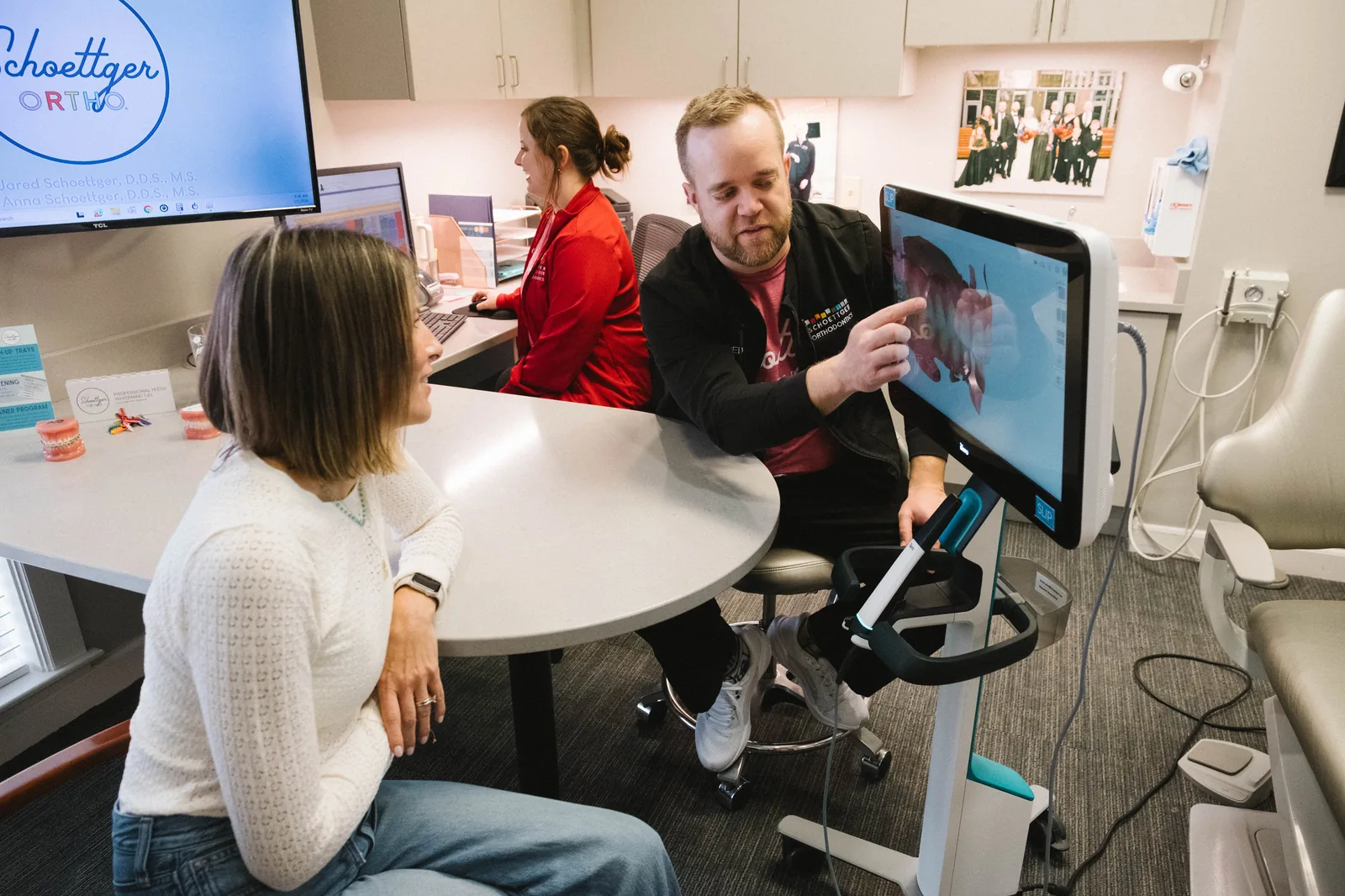
An Invisalign refinement begins with an evaluation of your smile. Your orthodontist checks tray fit, tooth positions, spacing, and the way your upper and lower teeth meet. Updated digital scans capture your progress and guide targeted adjustments.
%20(1).png)
The custom-made aligners created for this phase continue moving selected teeth. Some patients need only a few changes, while others require a longer refinement period to address several movements or improve bite contact.
Refinement aligners look and feel much like earlier trays. Initial aligners handle broader movement from your starting position. Refinement trays focus on details that remain after your orthodontist evaluates your progress.
The refinement phase may help:
- Close small spaces to create a smoother smile.
- Complete a rotation that did not progress as projected.
- Improve the angle or position of a tooth.
- Correct minor bite contacts.
- Bring a tooth back into sequence after it stopped tracking.
- Support stable alignment before retainers are made.
Retainers serve a different purpose. They hold teeth in their corrected positions after active movement has finished. Completing recommended refinements helps your orthodontist create a healthy, balanced result before moving you into retainers.
Why Invisalign Refinements May Be Needed
Even patients who follow every instruction may need additional aligners prescribed. Some tooth movements are less predictable than others. Rotations, root positioning, and vertical movements can take extra time, particularly when a tooth has an unusual shape or limited surface area for the aligner to grip.
Patient habits can also affect progress. Invisalign clear aligners need to be worn for the daily period recommended by the orthodontist. Removing them for long stretches can reduce the consistent pressure needed for movement. Lost trays, delayed changes, and damaged aligners may also interrupt the sequence.
Parents helping children or teens can establish routines around meals, school, sports, and bedtime. Adults may find that planning for work, travel, and social events helps them stay consistent.
The following table shows common reasons for refinement treatment and how they may be addressed.
Refinements may also be requested when the patient and orthodontist agree that a small cosmetic change is appropriate. For example, a front tooth may need slight leveling to create a smoother smile line. Your orthodontist will explain whether the change can be achieved safely and how it may support your appearance, bite function, and oral health.
A refinement should be based on a clinical assessment, not only a digital preview. Tooth position, gum health, root position, bite function, and stability all matter.
What Happens During the Refinement Process
The refinement process usually begins near the end of a planned series, although an orthodontist may recommend rescanning earlier if several teeth are no longer tracking. When an aligner stops fitting properly, contact your orthodontic team before moving to the next tray.
A refinement process may include the following steps:
- Progress evaluation: Your orthodontist compares your current tooth positions with the treatment plan. The evaluation may include photographs, digital imaging, and a bite examination.
- Updated digital scan: An intraoral scanner records the current shape and position of your teeth, providing a new starting point for planning.
- Treatment review: Your orthodontist evaluates the remaining movement and determines whether changes are needed.
- Production of new aligners: If refinements are recommended, revised trays are made from the updated plan. You may need to keep wearing your current aligner while waiting.
- Refinement wear: You begin the new trays and follow the prescribed change schedule.
- Ongoing checks: Appointments allow the orthodontist to confirm that teeth are tracking and the bite is improving.
The exact sequence may vary according to your treatment needs. The wait between scanning and receiving refinement trays may create a brief holding period. Your orthodontist may ask you to continue wearing the last aligner to reduce shifting. The team will provide instructions that fit school, work, sports, travel, and family schedules.
Refinement trays can feel tight when first inserted. Mild pressure may occur as the aligners begin guiding the selected teeth. Some patients may also notice temporary changes in pronunciation, and understanding how clear aligners can influence speech can make the adjustment period easier. Contact the office if you experience severe pain, ongoing irritation, a cracked tray, or an aligner that cannot be seated.
Your orthodontist will review your aligners and any attachments during the refinement assessment, then explain whether adjustments are needed for the next stage of treatment.
How Many Refinement Aligners Are Normal?
There is no single number that applies to every Invisalign patient. The number of refinement aligners varies because each patient’s teeth, bite, treatment goals, and response to aligner wear are different. Your orthodontist will review your progress and explain whether another series is recommended.
A refinement series may be shorter or longer depending on how far each tooth still needs to move, the type of movement required, and the orthodontist’s goals for the finished smile and bite.
Refinements allow your orthodontist to fine-tune treatment based on your progress. They help address remaining concerns before retainers are made, supporting a result that looks natural, functions comfortably, and remains stable.
Treatment length may be affected by:
- The difficulty of the remaining movements.
- How consistently the aligners are worn.
- Whether attachments stay in place.
- How well each new aligner fits.
- The health of the teeth, gums, and supporting bone.
- Missed visits or delays in reporting a problem.
Refinement costs depend on the treatment agreement and provider. Schoettger Orthodontics provides one upfront treatment price and includes necessary visits, after-hours care, one round of retainers, and post-treatment checkups for up to one year. Your team can explain whether refinements are recommended and how they relate to the terms of your individual treatment plan.
During your free consultation, the team can review your treatment fee, payment options, aligner plan, retainers, and follow-up care. The quoted treatment fee is the same whether a patient chooses traditional braces, clear braces, or Invisalign, and automatic no-interest payment plans are available.
You may choose not to proceed with a recommended refinement, but remaining spacing, alignment, or bite concerns may not be fully corrected. Talk with your orthodontist about your progress, the benefits of the recommended movement, and how each option may affect your smile and long-term dental health.
How to Reduce the Chance of Extra Refinements
Not every refinement can be prevented. Teeth sometimes respond differently despite strong patient cooperation. Daily habits still affect whether aligners deliver the planned force.
Wear each tray for the number of hours prescribed by your orthodontist. Follow your orthodontist’s instructions about when to remove your aligners for meals, drinks, brushing, and flossing. School, work, sports, travel, and social activities can make routines busy, but reminders and a consistent storage plan can help.
Parents can build aligner checks into morning and bedtime routines. Teens may benefit from keeping a case in a backpack or sports bag, while adults may prefer reminders around meals and work breaks.
Insert each aligner fully. A tray that is not seated against the teeth cannot apply pressure as planned. Your orthodontic team may recommend aligner seating aids after a tray change.
Keep trays in their case whenever they are removed. Wrapping an aligner in a napkin makes it easy to throw away, while placing it in a pocket or bag can bend the material. Contact the office if a tray is lost so the team can tell you what to do next.
Clean your teeth before reinserting the trays when possible. Good oral hygiene protects the gums and enamel and keeps attachments easier to inspect.
Attend scheduled appointments even when the aligners seem to fit. Orthodontists evaluate details that may not be obvious in the mirror, including root movement and bite contact.
Report problems promptly. Contact the office when:
- An attachment falls off.
- A tray cracks, bends, or goes missing.
- An aligner develops a visible gap around a tooth.
- You cannot insert the next tray fully.
- A sharp edge causes ongoing irritation.
- Dental treatment changes the shape of a tooth.
- You have pain that feels different from normal aligner pressure.
When a tooth is not tracking as expected, contact your orthodontic team rather than changing the schedule yourself. Extra wear time can help in some situations, but your orthodontist can recommend the safest next step.
Moving from Refinements to Retainers
Refinement treatment ends when your orthodontist is satisfied with the alignment, bite, and stability of the result. A final assessment confirms that active movement can stop. Retainers are then made to hold the new positions while surrounding tissues adjust.
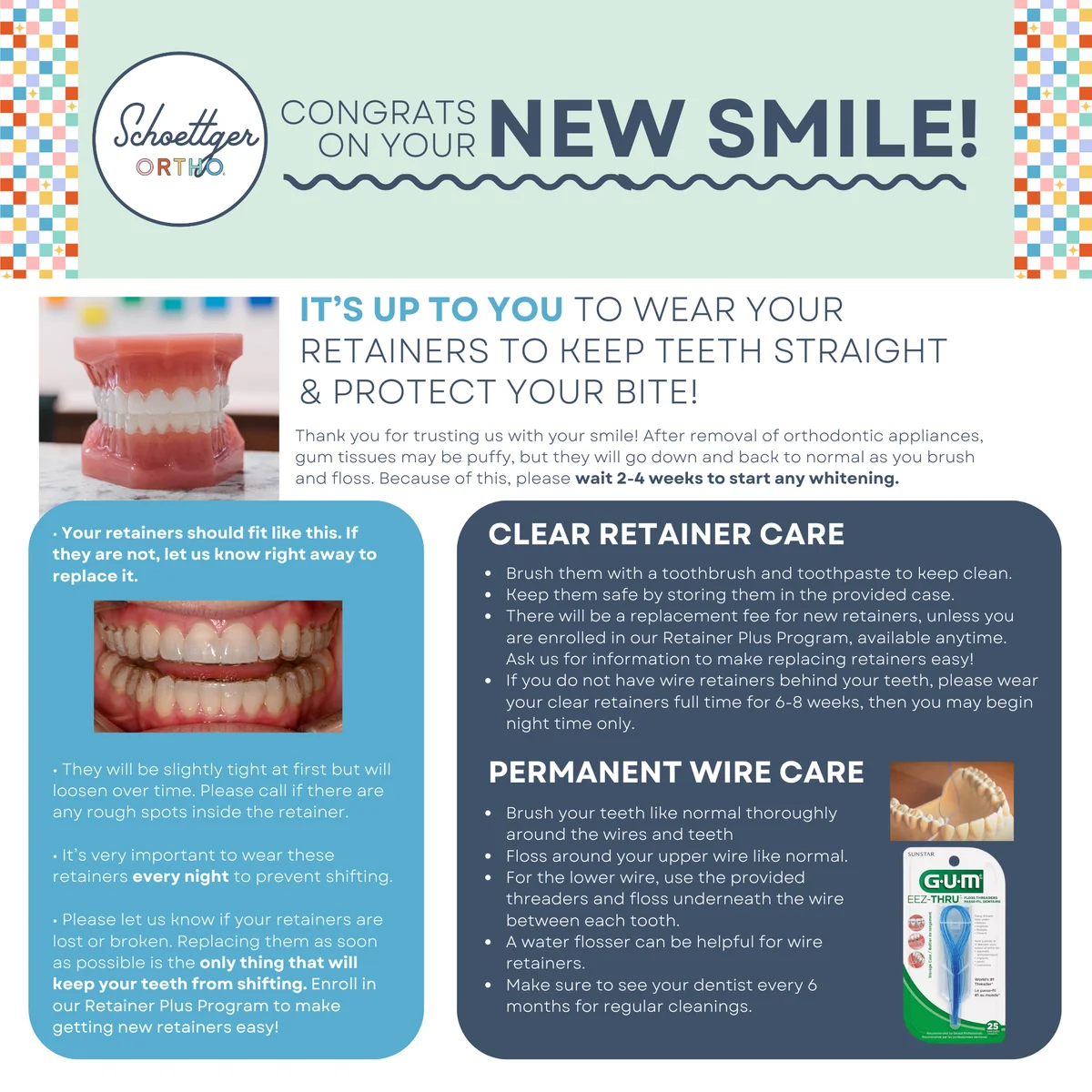
Retainer wear is important because teeth can shift after Invisalign treatment. Follow the schedule provided by your orthodontist. A damaged, lost, or poorly fitting retainer should be replaced promptly.
Schoettger Orthodontics provides Invisalign care for children, teens, and adults in Lincoln, Seward, and surrounding Nebraska communities. Its board-certified orthodontists combine digital scanning and individualized planning with personal attention throughout treatment. Patients receive clear guidance in a welcoming environment from the first scan through refinements, retainers, and follow-up care.
The team understands that each patient has different goals and routines. Whether a parent is seeking gentle care for a child, a teen wants an option that fits school and activities, or an adult wants to improve smile confidence, treatment is planned around the individual. Schoettger Orthodontics is a Blue Diamond+ Invisalign provider and ranks among the top one percent of Invisalign providers nationwide.
Patients with questions about aligner tracking, refinement trays, or remaining alignment and bite concerns can schedule a free consultation with Schoettger Orthodontics. The team will listen, assess your smile, answer your questions, and discuss a personalized plan that supports your comfort, confidence, routine, and long-term dental health.
.png)
Start your smile transformation today
Schedule your free consultation and discover your Schoettger shine.