Invisalign Accessories 101: Chewies, Attachments & the MyInvisalign App
What Invisalign attachments and chewies do, how to use the MyInvisalign app, and the daily wear and care habits that keep treatment on schedule.

Invisalign treatment involves more than just wearing trays. A handful of small accessories, tooth-colored attachments, foam chewies, and a companion app, all work together to help your treatment stay on track and finish on schedule. Here's what each one does and how to use them well.
Buttons and Attachments
Attachments, sometimes called buttons, are small tooth-colored bumps bonded to specific teeth during treatment. They're not decorative; they give your aligner trays extra grip on the tooth, which allows more precise and controlled movement than the tray could achieve on a smooth tooth surface alone.
It's not unusual for an attachment to come off occasionally during treatment. If a regular attachment falls off, it's not urgent. Call to let us know, and we'll assess whether it needs to be replaced right away or can wait until your next scheduled visit. There's one exception worth knowing: if an attachment used to anchor rubber bands comes loose, call us right away, since that type plays a more active role in your bite correction and shouldn't go unaddressed.
Chewies: Small Tool, Big Difference
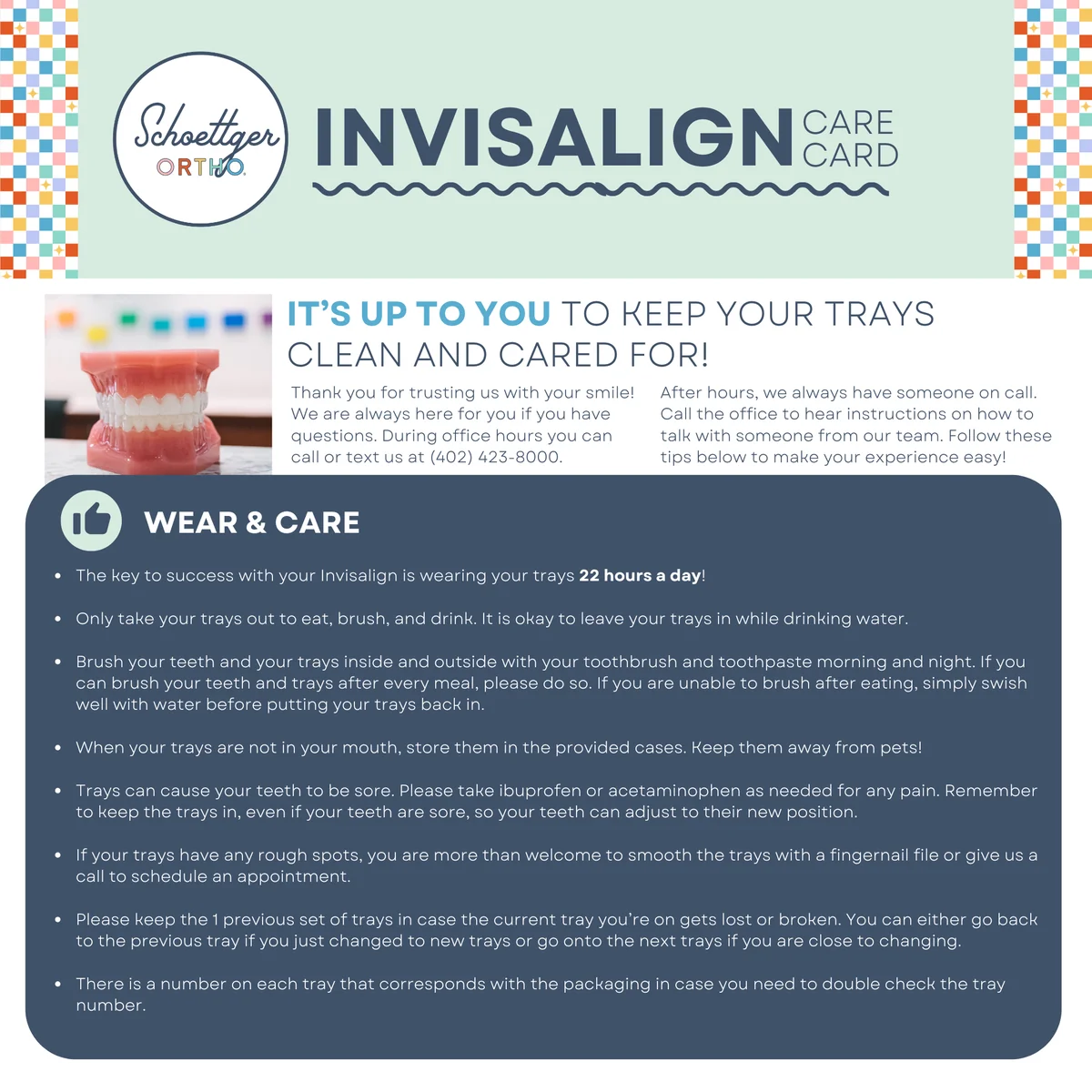
Chewies are small foam cylinders designed to help seat a new tray fully and evenly against your teeth. Use one at the very start of every new tray, for the first one to three days, about five minutes in the morning and five minutes at night. Bite down on the chewie along different sections of your arch, working your way around, rather than biting in just one spot.
This simple step matters more than it seems. A tray that isn't fully seated doesn't apply the intended pressure to move teeth as planned, which can slow progress or lead to trays that don't track well later in the series. A few minutes with a chewie at the start of each new tray keeps everything moving as intended.
The MyInvisalign App
We recommend every Invisalign patient download the MyInvisalign app early in treatment. It's a genuinely useful tool for staying on track between appointments, offering reminders for when to change to your next tray, a place to log progress photos over time, and wear-time tracking so you can see exactly how consistent you've been. For teens especially, having wear time tracked in an app can turn an abstract instruction, "wear your trays 22 hours a day," into something concrete and easy to follow.
General Wear and Care
A few core habits apply throughout Invisalign treatment, regardless of which stage you're in:
Protecting Your Teeth From Decalcification
Just like with braces, plaque that's allowed to build up around aligner trays can leave permanent white marks on your enamel where the tray sat. Brush and floss often, limit sugary drinks to about once a week, and never drink pop or other sugary drinks with your trays in, since sugar trapped against your teeth under a tray for hours creates a much higher risk of rapid decay than the same drink without a tray in place.
When to Reach Out
Most of what comes up during Invisalign treatment is manageable at home with the tips above, but a few things are always worth a call: a rubber-band attachment that comes loose, a tray that's cracked or lost, or ongoing soreness that doesn't improve after a few days on a new tray. Reach us anytime at (402) 423-8000.
For a look at how the Invisalign Palatal Expander works if your child is using clear aligner technology for early palate expansion, see our IPE guide. And for care instructions on every appliance we offer, visit our Appliance & Aftercare Instructions page.
Building Wear Time Into Your Day
Hitting 22 hours of wear consistently is the single biggest factor in staying on schedule with Invisalign, and it comes down to a few practical habits rather than willpower alone. Eat full meals rather than frequent snacking, since each removal is an opportunity to forget to put trays back in promptly. Brush right after breakfast and dinner so trays go back in clean rather than sitting out while you finish other parts of your routine. And keep a spare case in a bag, backpack, or car, so a tray never ends up loose and unprotected when you're away from home.
Traveling and Special Occasions
Special events, from school photo day to a family wedding, sometimes come with questions about trays and attachments. The honest answer is that consistency matters more than any single event. If you're traveling, pack your current tray, your case, a spare set of chewies, and know which prior tray to fall back on if something happens to your current one while you're away from home. A little planning ahead means one busy week doesn't throw off weeks of progress.
Frequently Asked Questions
Can I chew gum with Invisalign trays in?
No. Gum sticks to the tray material and is very difficult to remove cleanly, so it's best avoided entirely during treatment, tray in or out.
What if I lose a chewie?
Let us know at your next visit and we'll make sure you have more on hand. They're inexpensive and easy to replace.
My teen keeps forgetting to log wear time in the app. Does that matter?
The app tracking itself is a helpful tool, not a requirement, so don't worry if logging is inconsistent. What matters most is the actual wear time, which we can also assess at your in-office visits.
What a Typical Tray Change Feels Like
Every one to two weeks, depending on your treatment plan, you'll move to the next tray in your series. Expect a bit of pressure or tightness for the first day or so as your teeth begin adjusting to the new tray's shape, generally milder than the soreness associated with a braces adjustment. This is exactly when chewies do the most good, helping the new tray seat fully so it can start working right away rather than gradually settling into place over several days on its own.
By the second or third day on a new tray, most patients report feeling back to normal. If discomfort is still significant well beyond that window, it's worth a call rather than assuming it will simply resolve, since it could mean a tray needs a small adjustment.
Schedule your free consultation and discover your Schoettger shine.

Start your smile transformation today
Schedule your free consultation and discover your Schoettger shine.