When Should Invisalign Trays Be Replaced?
Learn when to replace Invisalign trays and how to care for them for the best results. Schoettger Orthodontics of Lincoln and Seward, Nebraska, explains tray wear schedules, signs it’s time for a new aligner, and easy care tips to keep your smile on track. Discover flexible solutions, patient resources, and expert support from your local orthodontic specialists.


When Should Invisalign Trays Be Replaced?
Invisalign works through a planned series of clear aligners that move teeth in small, steady steps. Each set has a specific job. When that set has done its work, your orthodontist will tell you when to move to the next one.
For many patients, tray changes happen every 7 to 10 days. Some patients change weekly, while others may be asked to wear each set longer. Your schedule depends on your treatment plan, tooth movement, age, oral health, and how closely you wear your aligners as directed.
At Schoettger Orthodontics, our board-certified orthodontists help patients in Lincoln, Seward, and nearby communities understand what to expect during Invisalign treatment. Whether you are a parent helping a teen stay on track or an adult managing aligners around work and family life, the right timing can make treatment more comfortable and predictable.
When should Invisalign trays be replaced? The most important rule is simple: don't change trays early unless your orthodontist tells you to. A tray may feel loose near the end of the wear period, but that doesn't always mean your teeth and supporting tissues are ready for the next step. Your schedule protects your teeth, gums, and long-term results.

Why Tray Changes Matter for Invisalign Treatment
Every Invisalign tray is designed to guide your teeth from one position to the next. The movement is gentle, but it's still a biological process. Teeth move through the support of the bone and periodontal ligament around them. Those tissues need time to respond.
When you follow your tray schedule, each aligner has time to apply the right amount of pressure. That pressure helps the teeth move while giving the surrounding tissue time to adjust. Rushing the process can make aligners feel too tight, create soreness, or cause poor tracking.
Changing trays too late can also affect progress. If you stay in one set longer than needed without guidance, your treatment may take extra time. In some cases, the aligner may become worn, loose, stained, or less effective.
A good schedule balances three goals:
- Comfort: Your teeth need time to adapt to each new aligner.
- Progress: Each set should move your teeth according to the treatment plan.
- Fit: The aligner should seat well before you move ahead.
Schoettger Orthodontics uses advanced technology, digital planning, and in-person support to help patients stay on track. Since every smile is different, your schedule should come from your orthodontist, not from online advice or someone else's experience.
What Affects How Often You Change Trays
There's no single schedule that works for every patient. Some people change trays every 7 days. Others may switch every 10 days, every two weeks, or on another schedule recommended by their orthodontist.
Your orthodontist sets the timing based on how your teeth need to move. Small adjustments may allow for faster tray changes. Complex movements, bite correction, rotations, or larger shifts may need more time in each set.
Wear time also matters. Invisalign aligners usually need to be worn 20 to 22 hours per day. If trays are out too often for meals, snacks, sports, events, or forgetfulness, the teeth may not move as planned. When that happens, your orthodontist may ask you to wear the current set longer before switching.
Age can also play a role. Teens and adults can both have great Invisalign results, but growth, tooth movement, and daily habits may affect timing. Gum health, bone support, dental history, and sensitivity are part of the decision too.
Your schedule may also change during treatment. If your teeth are tracking well, your orthodontist may keep the same pace. If a tray doesn't fit correctly, or if your teeth need extra time, your plan may be adjusted.
Common factors that affect tray timing include:
- Complexity of tooth movement
- Daily wear time
- How well the aligners fit
- Gum and dental health
- Missed wear days
- Lost, cracked, or damaged trays
- Patient age and growth
- Progress seen during checkups
This is why regular orthodontic visits are so helpful. Your dentist can help with dental cleanings and general oral health, but your orthodontist is the best resource for tray timing, movement tracking, and aligner fit.
How to Know When to Switch Trays
How do you know when you're ready to change Invisalign trays?
A calendar reminder helps, but the date isn't the only sign that you are ready for a tray switch. Your current aligner should fit well before you move to the next set. If the tray is still tight, has visible gaps, or doesn't sit fully, your teeth may need more time.
A well-fitting aligner should hug the teeth closely. You shouldn't see large spaces between the edge of the aligner and the tooth surface. The tray should snap into place without forcing it. Mild pressure after a new set is normal, but strong pain or a poor fit is not something to ignore.
Some patients use chewies to help seat aligners. These small tools can help apply gentle biting pressure so the tray fits more closely. Use them only as directed by your orthodontic team.
The best time of day to change Invisalign aligners is often at night. Switching before bed lets you sleep through the first several hours of pressure. This can make the adjustment feel easier by morning. If your orthodontist has given you a different routine, follow that plan.
Tracking and Fit Guide
Note: Use this table as a general guide, but always follow your provider's instructions.
Tray seats fully with light pressure
- What It May Mean: Teeth may be tracking well.
- What to Do: Change on schedule if instructed.
Tray feels slightly tight for the first day or two
- What It May Mean: Normal pressure from a new set.
- What to Do: Keep wearing as directed.
Tray has visible gaps near teeth
- What It May Mean: Teeth may not be ready.
- What to Do: Use chewies if instructed and contact your orthodontist.
Tray feels painfully tight
- What It May Mean: The set may not be seating correctly.
- What to Do: Don't force it. Call for guidance.
Tray feels loose near the scheduled change date
- What It May Mean: Current movement may be complete.
- What to Do: Switch only when your schedule says to.
Tray is cracked, lost, or warped
- What It May Mean: Treatment may be interrupted.
- What to Do: Contact your orthodontic team promptly.
If you're unsure, don't guess. A quick call or photo check with Schoettger Orthodontics can help you avoid moving too fast or falling behind.
What Happens If You Miss a Tray Change
Missing a tray change is common, especially for busy families, students, and adults with packed schedules. A short delay usually doesn't ruin treatment. The best response depends on how long the delay lasted and how your aligners fit.
If you forgot to change trays by a day or two, you may be able to move to the next set and continue your schedule. If the new set feels unusually tight or doesn't fit well, stop and contact your orthodontist.
If you missed several days of wear, lost a tray, or skipped ahead by mistake, don't try to make up for it by switching trays faster. Teeth need steady pressure, not sudden force. Moving forward too quickly can lead to poor tracking and discomfort.
If you changed too early and the aligner doesn't seat, your orthodontist may ask you to go back to the previous set for extra time. If the previous set is lost or damaged, the team can help decide whether you need a replacement aligner, a longer wear period, or an appointment.
Patients often ask whether changing Invisalign trays 2 days early is okay. The safest answer is to ask your orthodontist first. Even if the tray feels comfortable, the tissues around your teeth may still be adapting.
If your schedule gets off track, take these steps:
- Keep wearing the best-fitting tray. Don't leave your teeth without an aligner unless your provider tells you to.
- Contact your orthodontic office. Share the tray number, how long you wore it, and what happened.
- Don't skip ahead. Moving forward without guidance can create fit problems.
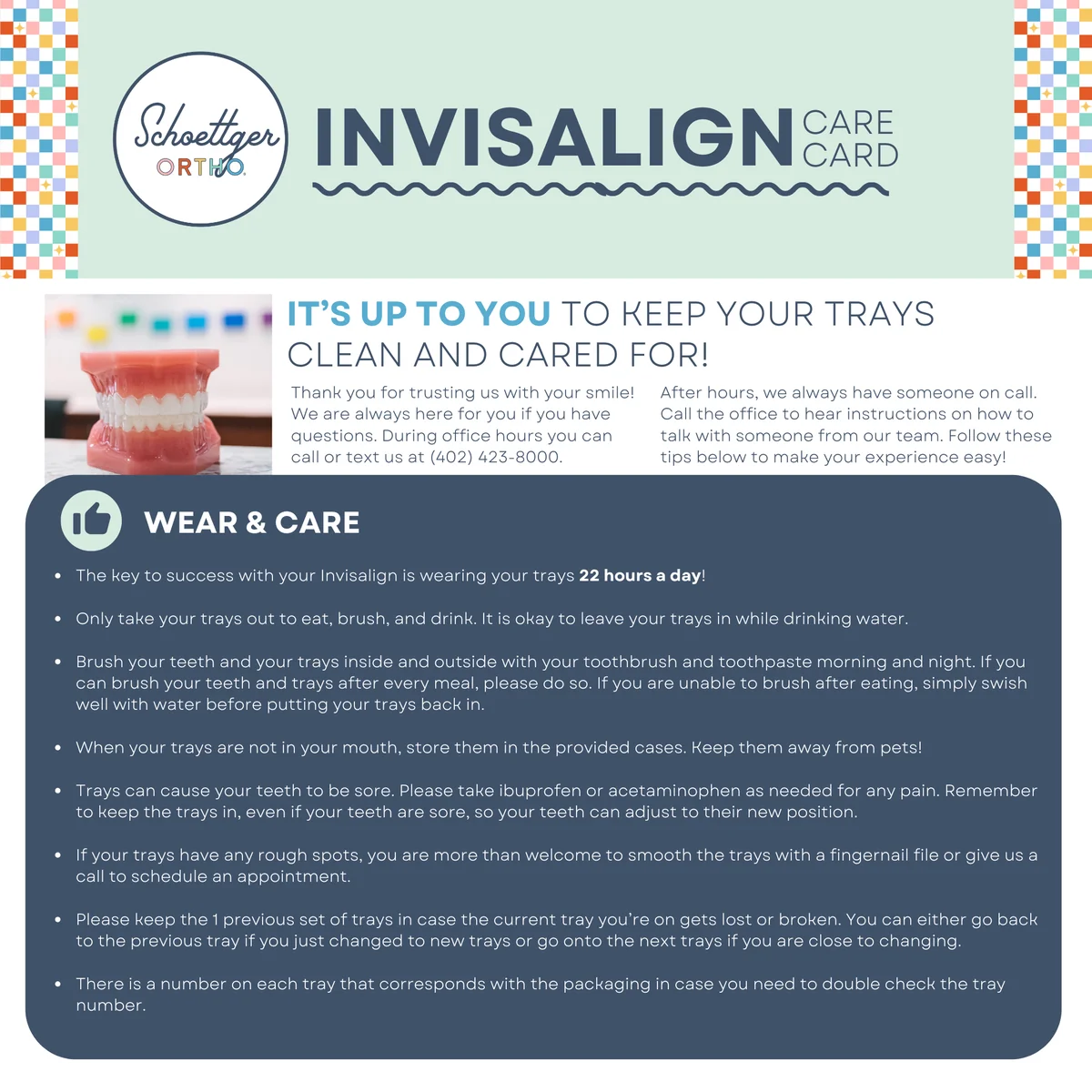
- Am I supposed to keep my old Invisalign trays? Save your old trays. Your orthodontist may ask you to use a previous set if the current one is lost or doesn't fit.
- Update your reminders. A phone alarm or calendar note can help prevent another delay.
At Schoettger Orthodontics, our team understands that life happens. Honest communication helps us protect your progress and keep treatment as smooth as possible.
Tips for Smooth Tray Changes
Tray changes are easier when you build habits around comfort, cleaning, and consistency. Most patients feel the most pressure during the first day or two of a new set. That pressure should be manageable and should fade as your teeth adjust.
Changing at night can help. Brush and floss, clean the new aligner, place it in before bed, and wear it through the night. By morning, the tray may already feel more comfortable.
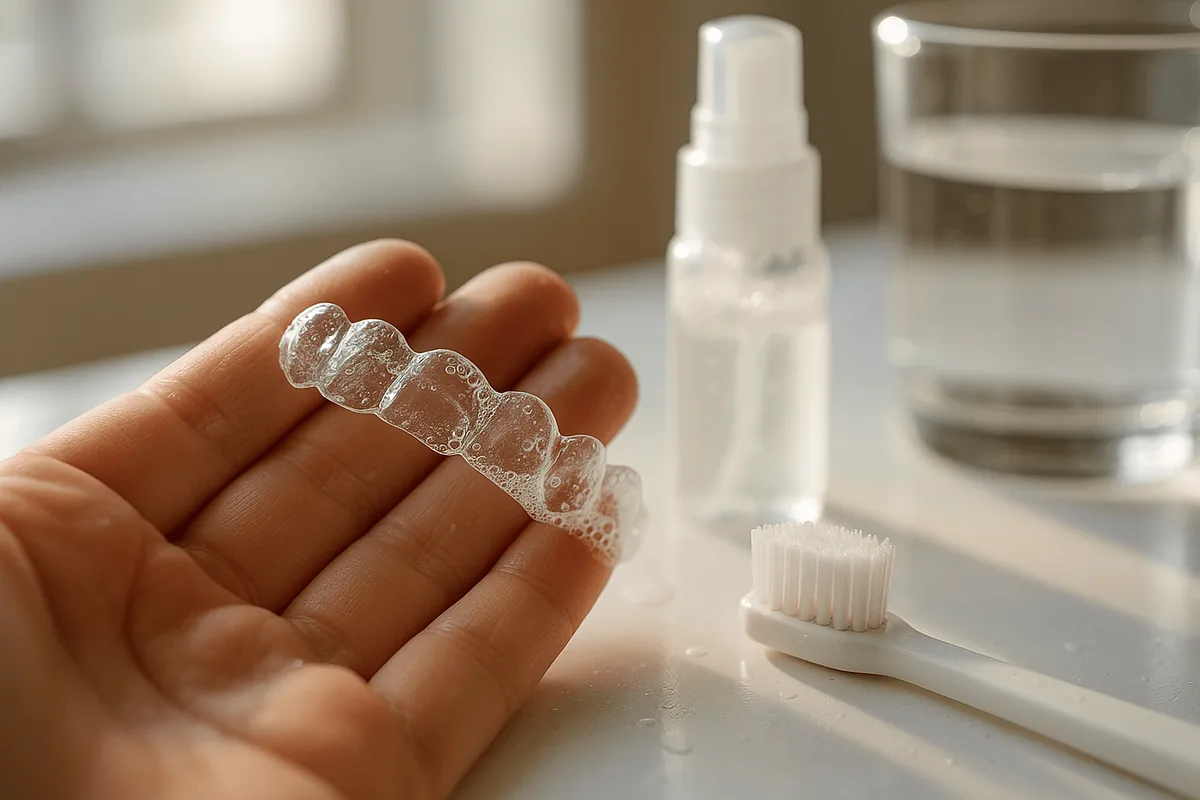
Good hygiene also helps. Food and plaque trapped under aligners can irritate gums and affect dental health. Clean your teeth before reinserting aligners whenever possible. Rinse your trays with lukewarm water, and avoid hot water because it can warp the plastic.
Try to keep your aligners in for the recommended wear time each day. Removing them too often can slow progress. If meals and snacks make wear time difficult, plan eating windows so the trays are out for shorter periods.
Helpful habits include:
- Set a tray change reminder for the exact day your orthodontist recommends.
- Keep your case nearby so trays are not lost during meals.
- Use chewies as directed if your aligners need help seating.
- Track wear time with an app, phone note, or written calendar.
- Bring trays to appointments so your orthodontist can check fit.
- Keep previous aligners until your team says they can be discarded
- Call if something feels wrong rather than forcing a tight tray.
These small habits can help patients stay on schedule and avoid preventable setbacks. They also make Invisalign easier for teens, parents, and adults balancing treatment with everyday life.
Keep Your Smile Moving with Schoettger Orthodontics
Invisalign trays should be replaced according to the schedule your orthodontist gives you. For many patients, that means changing every 7 to 10 days, but your timing may be different. The right schedule depends on tooth movement, wear time, fit, comfort, and your overall treatment goals.
If a tray fits well, your teeth feel ready, and your scheduled date has arrived, you may be ready for the next set. If the aligner feels too tight, has gaps, or won't seat, contact your orthodontic team before switching. A short delay is easier to fix than a tray sequence that gets too far off track.
Schoettger Orthodontics helps kids, teens, and adults in Lincoln and Seward feel confident through every stage of Invisalign treatment. Our board-certified orthodontists combine advanced technology with a warm, family-focused approach, so you always know what's happening and why.
If you have questions about your tray schedule, a missed tray switch, lost aligners, or whether Invisalign is right for your smile, schedule a free consultation with Schoettger Orthodontics. Our team is here to help you stay comfortable, stay informed, and discover your Schoettger Shine.
Start your smile transformation today
Schedule your free consultation and discover your Schoettger shine.